
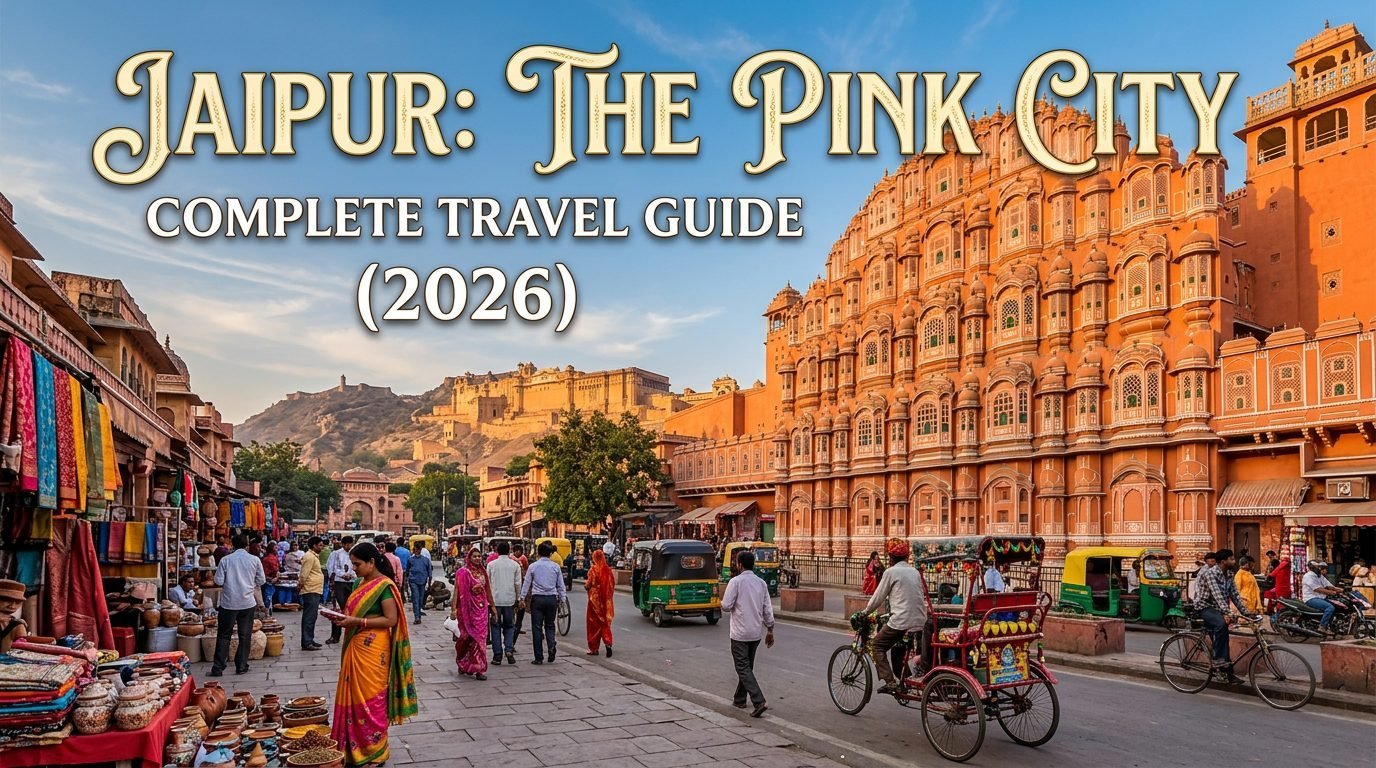
Jaipur, the capital city of Rajasthan, stands as one of India’s most captivating destinations, blending royal heritage with vibrant culture. Founded in 1727 by Maharaja Sawai Jai Singh II, he planned the city carefully before making it, which makes it the first planned city in India.
Jaipur is also known as the “Pink City” since 1876, when the whole city was meticulously painted pink to welcome Prince Albert and Queen Victoria. Pink colour means welcome in Jaipur from our heart.
Now Jaipur is a part of famous Golden Triangle package, which has Jaipur along with Delhi and Agra. Most of the indian and foreign tourists came here to see culture of Jaipur, and Royal Hospitality of Jaipur, along with luxury hotels like Ramgarh Palace. Most of the royal hotels are famous for their architecture and royal hospitality.
The city’s UNESCO World Heritage status, granted in 2019, recognizes its exceptional urban planning and architectural brilliance. From the royal palaces, busy markets, and shopping for handicrafts, jaipur gives travelers a true feel of royal Rajasthan along with modern architecture.
While reading this post, you will get full of information about Jaipur tourism, what are top attrection in Jaipur, and why you should choose Jaipur as your primary destination for a trip.
 -33%
-33%
Jaipur Tour Package From Mumbai 𝐚𝐭 ₹7,999 𝘽𝙤𝙤𝙠 𝙉𝙤𝙬!
 -33%
-33%
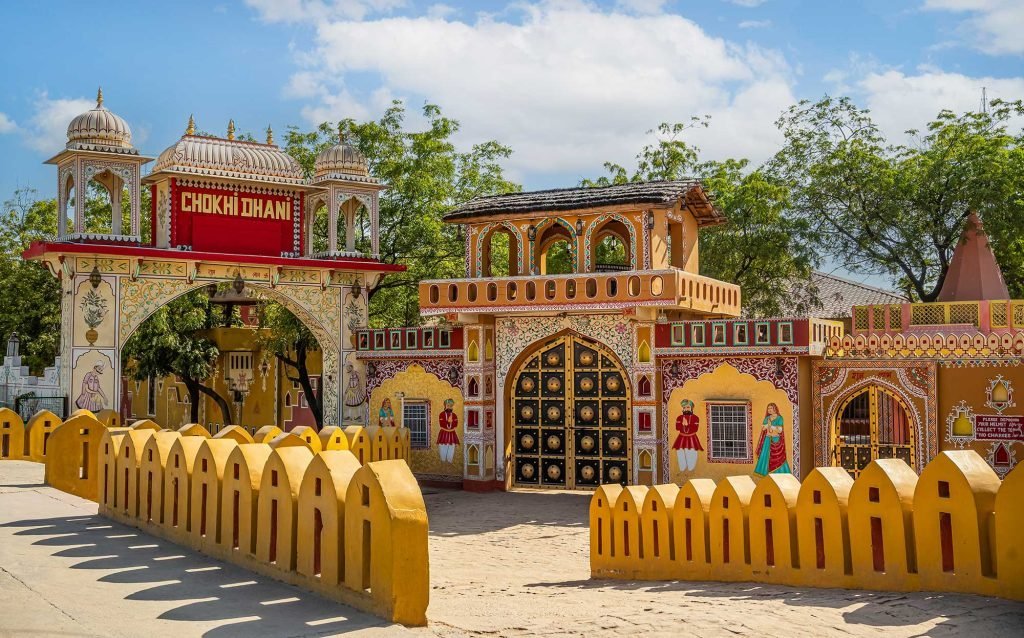
Jaipur Tour Package For Family For 3 Days With Chokhi dhani
 -21%
-21%
Jaipur Udaipur Jaisalmer Tour Packages | Book Now
 -33%
-33%
Jaipur 3 days Tour Package From Bangalore @8000
 -18%
-18%
Jaipur Jodhpur Jaisalmer Tour Packages From Delhi
 -14%
-14%
Jaipur Udaipur Jaisalmer Tour Package @27600
 -22%
-22%
Jaipur To Jaisalmer Tour Package Starting From @23500
 -21%
-21%
Jaipur Jodhpur Jaisalmer Tour Packages | Book Today
 -21%
-21%
Jaipur Jodhpur Udaipur Tour Package for 6 Days
 -24%
-24%
Jaipur Udaipur Tour Package With luxury Accommodation
 -23%
-23%
Jaipur and Ranthambore tour Package with Jeep Safari
 -40%
-40%
Jaipur Tour Package for 2 Days @5100 – Best Deal
Royal History of Jaipur
Jaipur is the first to make by advance planning and supervision. Maharaja Sawai Jai Singh II, a great king and smart Rajput Ruler who loved science and maths, used some of the technology to create one of the best and smartest cities. The city was designed by Vidyadhar Bhattacharya using ideas from Shilpa Shastra.
The Jaipur was planned specially. It has straight roads and wide streets with a grid layout. The complete city was divided into nine parts, which represent the universe. In the centre, you will find the City Palace, which is one of the iconic places in Jaipur. This shows that the king used science and planning while building the city. He also built Jantar Mantar, one of the largest stone observatories in the world.
Jaipur was ruled by the Kachwaha dynasty, and they had a good relationship with Mughal Emperors. In a few years, the city trade will grow along with art and culture. Because of this, Jaipur grew fast and became rich in just a few years.
Culture of Jaipur
Jaipur is known for its culture, tradition, art and celebration. The city’s identity is deeply rooted in Rajput values of valour, honour, and hospitality. The city is known for celebrating festivals like Diwali, Holi, and Makar Sankranti. During these festivals, you can enjoy much more than on usual days, and it also helps you to understand the culture of Jaipur.
Traditional Arts and Crafts
Jaipur is famous for all over the world for its beautiful handmade items like Leather Mojaris/Juttis, Brass & Metalware, Hand-carved Wooden Furniture and Blue Pottery. The city is popular for blue pottery, which is bright colours and beautiful designs on items made of sand. Jaipur is also famous for hand-block printed cloths, especially Sanganeri and Bagru styles. Pink City is also a big centre for gemstone cutting and jewellery making.
Music and Dance
Jaipur is famous for folk music, and popular dances include ghoomar and kablbeliya. When you visit city palace, you should watch puppet show (Kathputli), which is also very famous. The Jaipur Literature Festival is organised every year in January. Many famous writers and artists around the world came here to join this event.
Festivals and Celebrations
Jaipur is a colourful city that celebrates festivals every month, like Teej and Gangaur, and other festivals. But Teej or Gangaur festivals are for women and celebrate Goddess Parvati. Makar Sankranti is another famous festival in India. During this festival, the sky is full of kites. The whole city shines with lights. Events like the Jaipur International Film Festival and Elephant Festival also attract many visitors.
Food Culture
Jaipur is famous for tasty Rajasthani food like dal baati churma and ker sangri saag. The city is also famous for sweets like ghewar and rabdi. Most of the Jaipur restaurants provide special Rajasthani thali, which has 2 to 3 types of churma, gatte ki sabji, 2 types of bati, tadka dal, and some types of sweets. Jaipur city has some popular street food places, like Jawahar Circle and Johari Bazaar. You can enjoy snacks like mirchi vada, bread pakora, pyaaz kachori and matka kulfi.
Traditional Dress
In Jaipur, people still wear traditional Rajasthani clothes, especially during festivals and weddings. Women wear colourful ghagra-cholis, and men wear turbans, dhotis and kote pants with a safa. In jaipur bandhani (tie-dye) is a popular style, known for its beautiful patterns.
Top Tourist Attractions in Jaipur
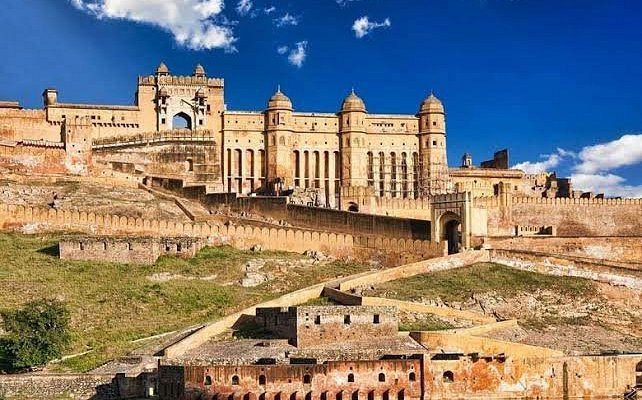
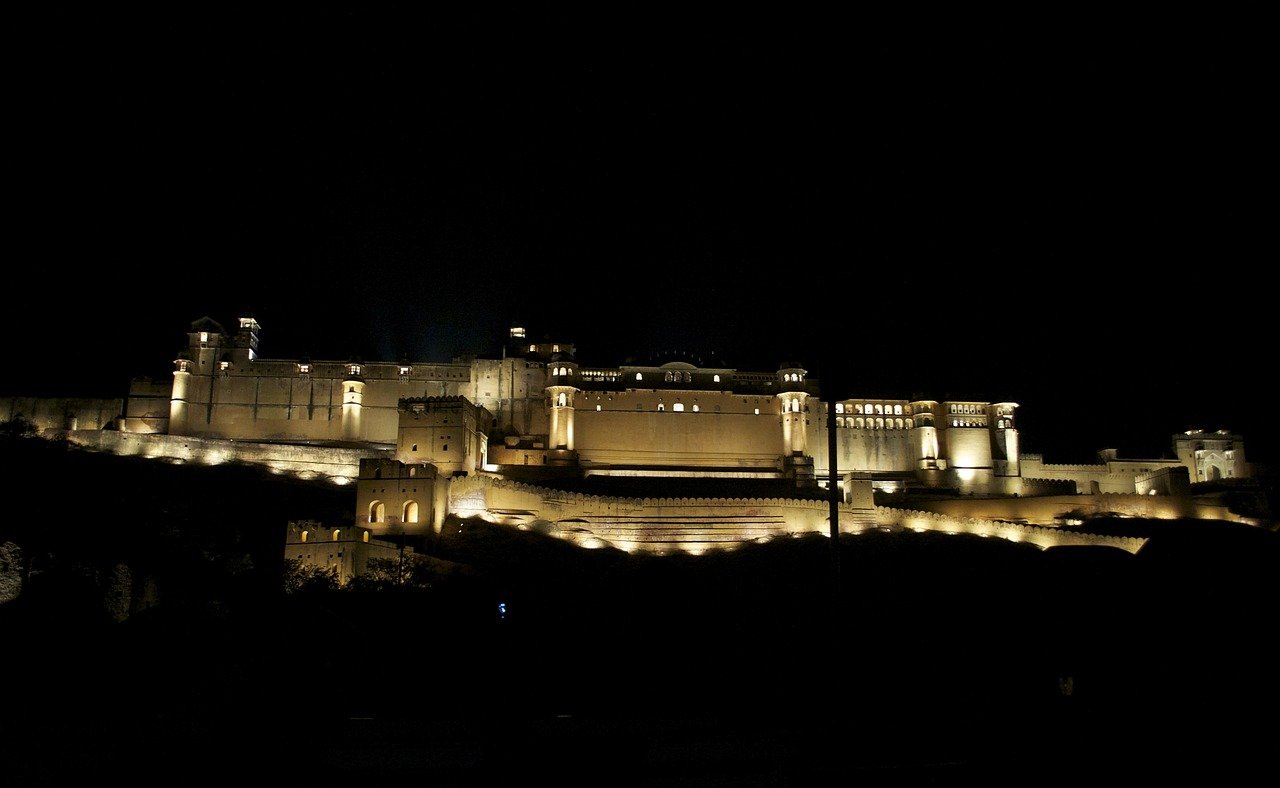
Amber Fort (Amer Fort) – The Crown Jewel
Amber Fort (Amer Mahal) is located about 11 km from the city centre, and it was built in 1592 by Raja Man Singh I. The fort is completely made of red sandstone and marble, and it was main residence of the Kachwaha kings.
Inside the fort, Sheesh Mahal (Mirror Palace), its famous for beautiful mirror work on walls. The fort also has a diwan-e-Aam and Diwan-e-khas, which is used for meetings. Travelers can easily reach Amer Fort using a jeep, a taxi, or a car.
In the evening, you can enjoy the fountain show near Amer Fort, and you can also take an elephant ride outside of the Amer Fort.
| Open and close time | 8:00 AM to 5:30 PM daily |
| Entry fee/ticket prices | ₹25 for Indian citizens, ₹200 for international visitors |
| Elephant rides cost near Amer fort | approximately ₹1,100 for two people |
| Visiting hours | Allow 2-3 hours for a complete visit. |
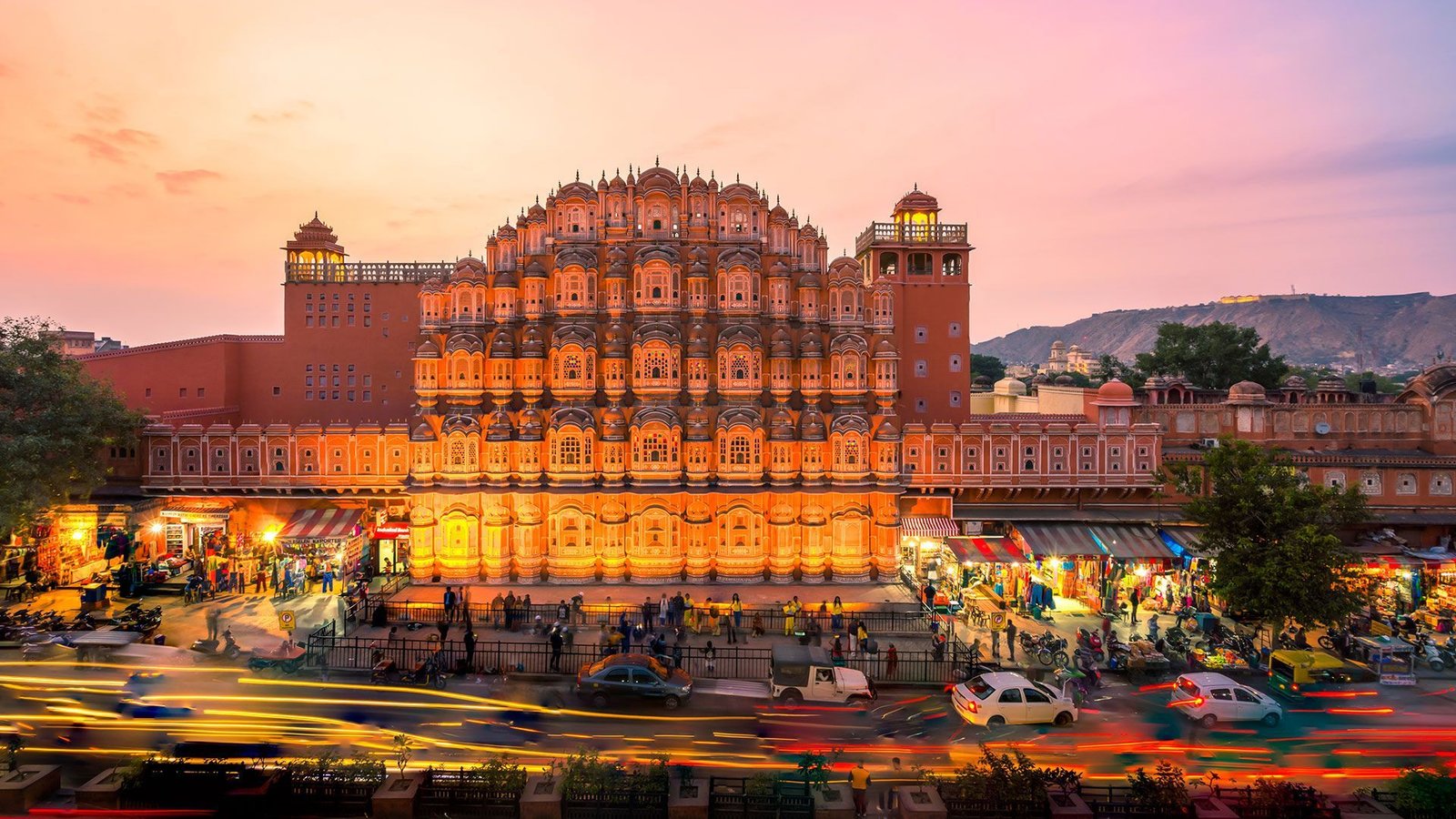
Hawa Mahal – Palace of Winds
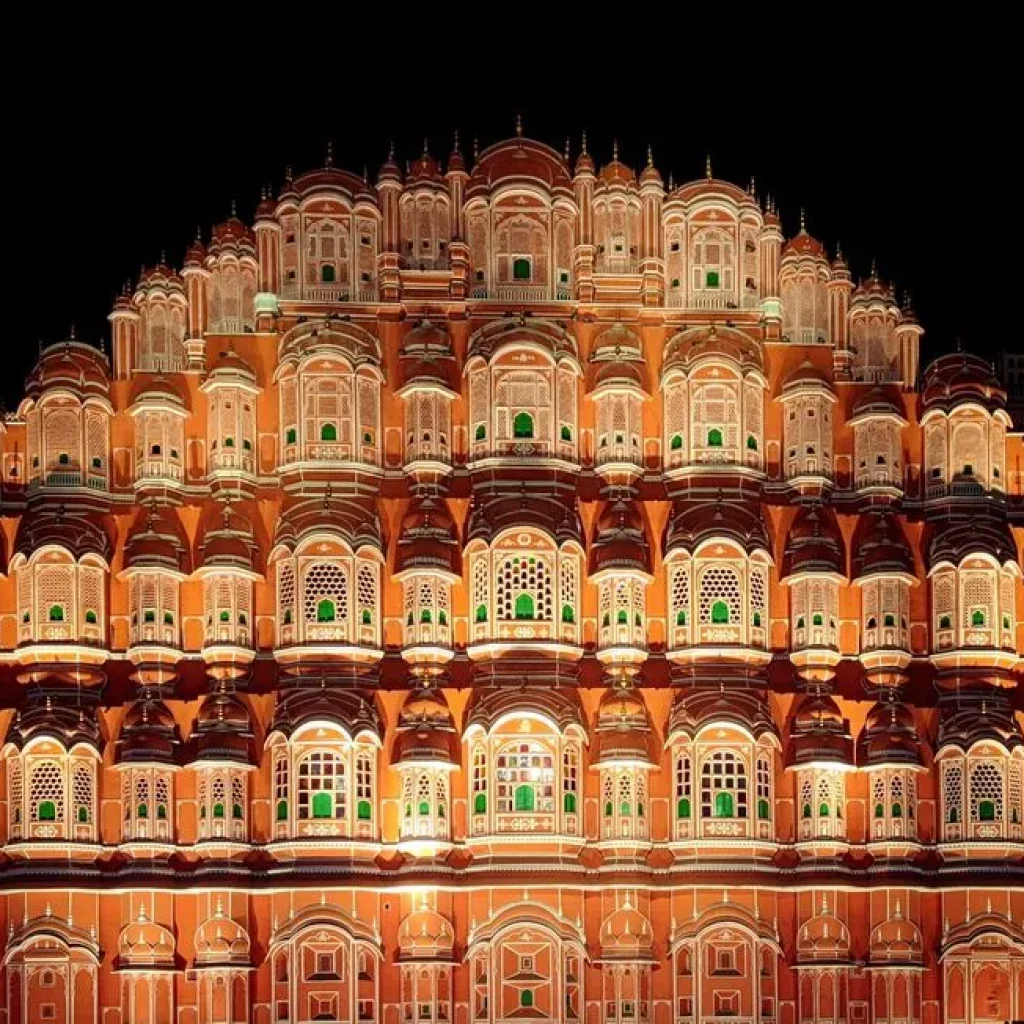
Rising above Jaipur’s busy Badi Chaupad, Hawa Mahal is one of the city’s most famous landmarks. Built in 1799 by Maharaja Sawai Pratap Singh, it has 953 small windows (jharokhas) made of red and pink sandstone.
The palace was designed so royal women could watch street life without being seen. Its windows also help keep the building cool by allowing air to flow inside.
Hawa Mahal has a unique honeycomb shape and stands on a thin base without a strong foundation, yet it has remained stable for years. The best time to visit is early morning when the sunlight makes it look golden. Visitors can enjoy city views from the top floors.
| Open and close time | 8:00 AM to 5:30 PM daily |
| Entry fee/ticket prices | ₹50 (Indians), ₹200 (Foreigners) |
| Visit Duration | 30–45 minutes |
City Palace – Royal Residence and Museum

Located in the heart of Jaipur, City Palace is a beautiful mix of Rajasthani, Mughal, and European architecture. It was started in 1729 by Maharaja Sawai Jai Singh II and later expanded by other rulers.
The palace complex includes courtyards, gardens, and buildings. The Chandra Mahal is still home to the royal family, while parts of the palace are open as a museum with royal clothes, weapons, and manuscripts.
Mubarak Mahal displays royal costumes, and Diwan-e-Khas is famous for two huge silver vessels, listed in the Guinness World Records. Pritam Niwas Chowk has four colourful gates representing the seasons, and Diwan-e-Aam shows beautiful miniature paintings
| Open and close time | 9:30 AM – 5:00 PM |
| Entry fee/ticket prices | ₹400 (Indians), ₹800 (Foreigners) |
| Visit Duration | 30–45 minutes |
Jantar Mantar – UNESCO Astronomical Observatory
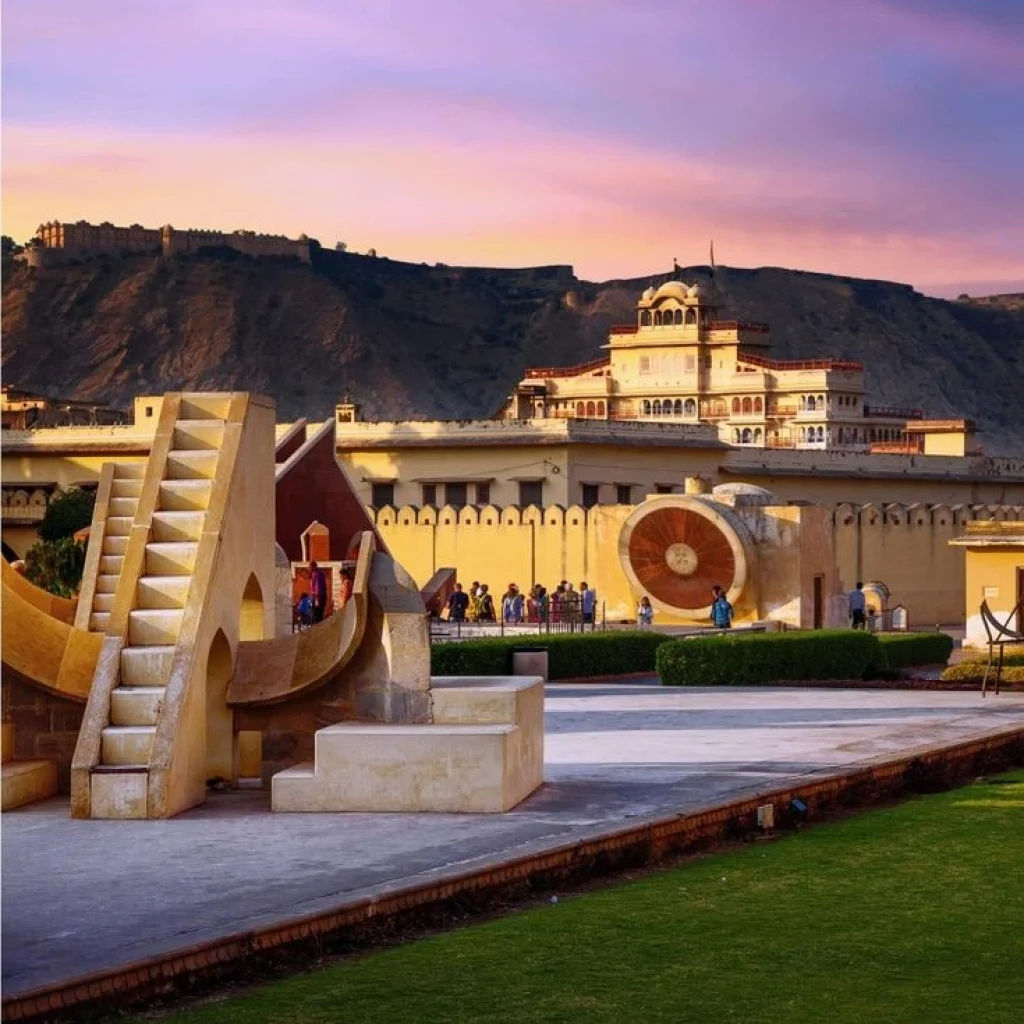
Jantar Mantar is the world’s largest stone astronomical observatory, built by Maharaja Sawai Jai Singh II between 1727 and 1734. It has 19 instruments used to measure time, track stars, and study celestial movements.
The main highlight is the Samrat Yantra, a huge sundial that can tell time with great accuracy. Other instruments like Jai Prakash Yantra and Ram Yantra were used to calculate positions of stars and planets.
Recognized as a UNESCO World Heritage Site in 2010, it shows the advanced knowledge of ancient Indian astronomy. Today, it is both a tourist attraction and a learning site.
| Open and close time | 9:30 AM – 5:00 PM |
| Entry fee/ticket prices | ₹50 (Indians), ₹200 (Foreigners) |
| Visit Duration | 1–2 hours |
Jal Mahal – The Floating Water Palace
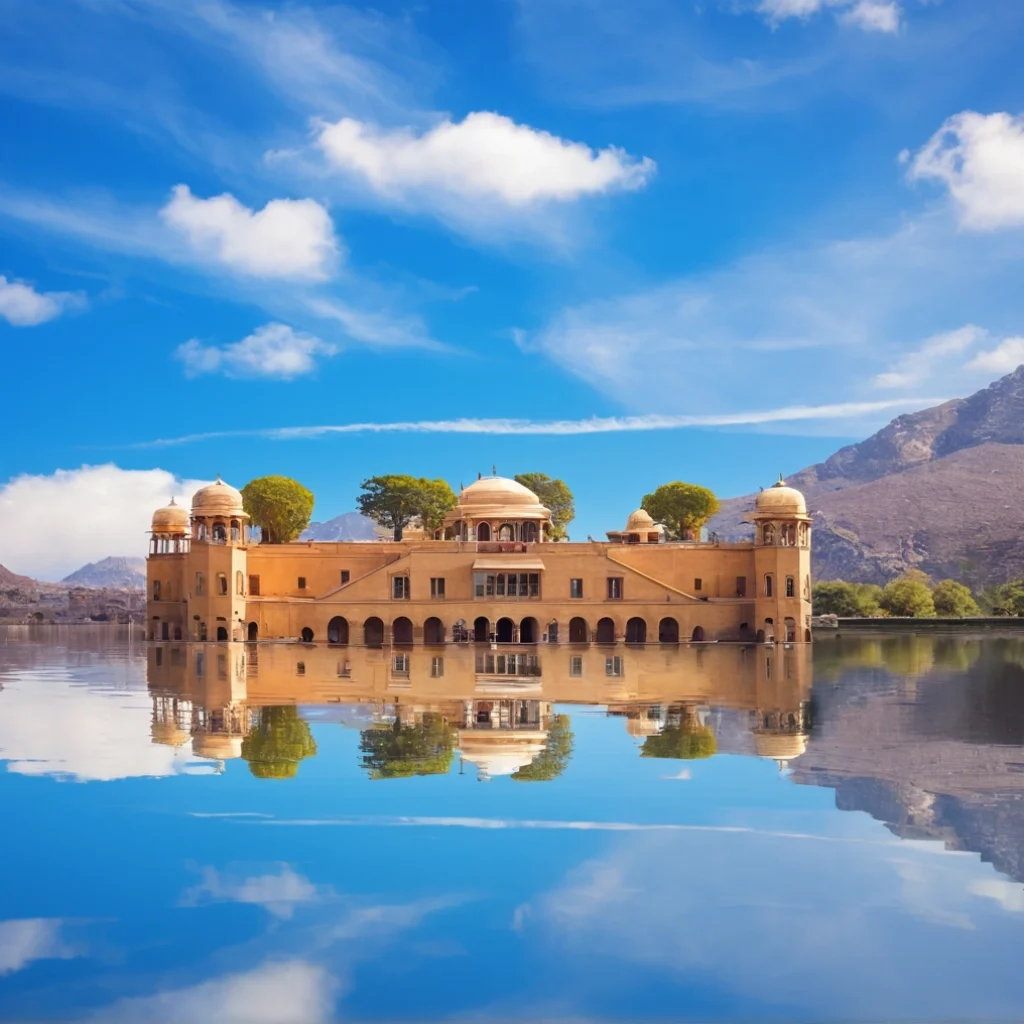
Jal Mahal is a beautiful palace located in the middle of Man Sagar Lake. Built in the 18th century by Maharaja Madho Singh I, it looks like it is floating on water, with most of its floors submerged when the lake is full.
The palace shows a mix of Rajput and Mughal architecture, with chhatris and arched designs. It was once used as a summer retreat for the royal family.
Today, visitors cannot go inside, but it offers amazing views from the lakeside. The best time to visit is during sunrise or sunset when the reflection of the palace looks stunning.
| Open and close time | Open for viewing all day |
| Entry fee/ticket prices | Free (from lakeside) |
| Visit Duration | 20–30 minutes |
Nahargarh Fort – Tiger Fort with Sunset Views

Nahargarh Fort is located on the Aravalli hills and offers stunning views of Jaipur. Built in 1734 by Maharaja Sawai Jai Singh II, it was mainly used as a royal retreat.
The fort includes Madhavendra Bhawan, a beautiful palace with identical rooms built for the king’s nine queens. It also connects to Jaigarh Fort through long defensive walls.
Nahargarh is famous for its sunset views, where the city looks golden from the top. It is a popular spot for photography and relaxing.
| Open and close time | 10:00 AM – 5:30 PM |
| Entry fee/ticket prices | ₹50 (Indians), ₹200 (Foreigners) |
| Camera Fee | ₹50 |
| Visit Duration | 1–2 hours |
Jaigarh Fort – Home to World’s Largest Cannon
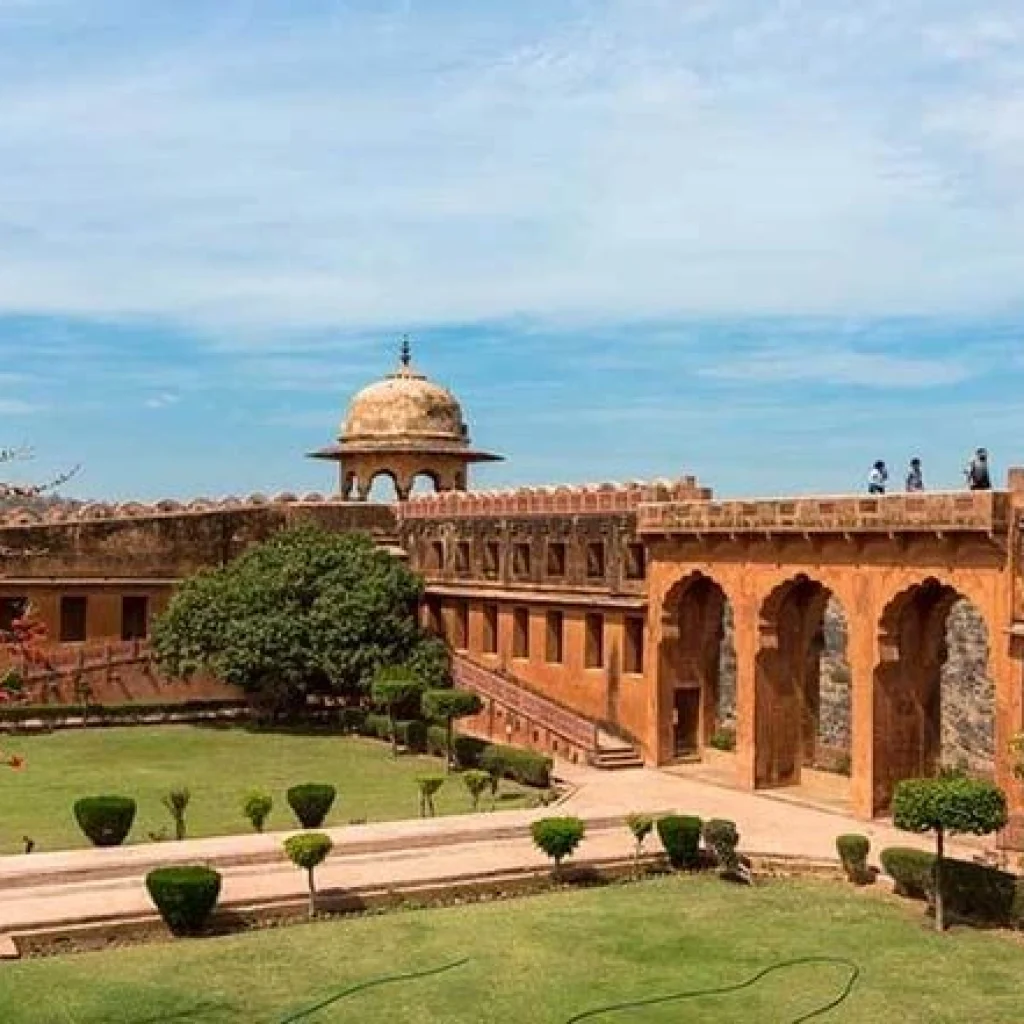
Jaigarh Fort stands on the Aravalli hills above Amber Fort and was built in 1726 by Maharaja Sawai Jai Singh II to protect the city.
The main highlight is the Jaivana Cannon, the world’s largest wheeled cannon, which was fired only once. The fort also has water tanks, granaries, and underground passages connected to Amber Fort.
Visitors can enjoy amazing views of Amber Fort, Nahargarh Fort, and the surrounding hills. The fort also has a museum with old weapons and artifacts.
| Open and close time | 9:00 AM – 4:30 PM |
| Entry fee/ticket prices | ₹35 (Indians), ₹85 (Foreigners) |
| Visit Duration | 1.5–2 hours |
Famous Shopping Markets in Jaipur
Johari Bazaar – Jewellery and Gems
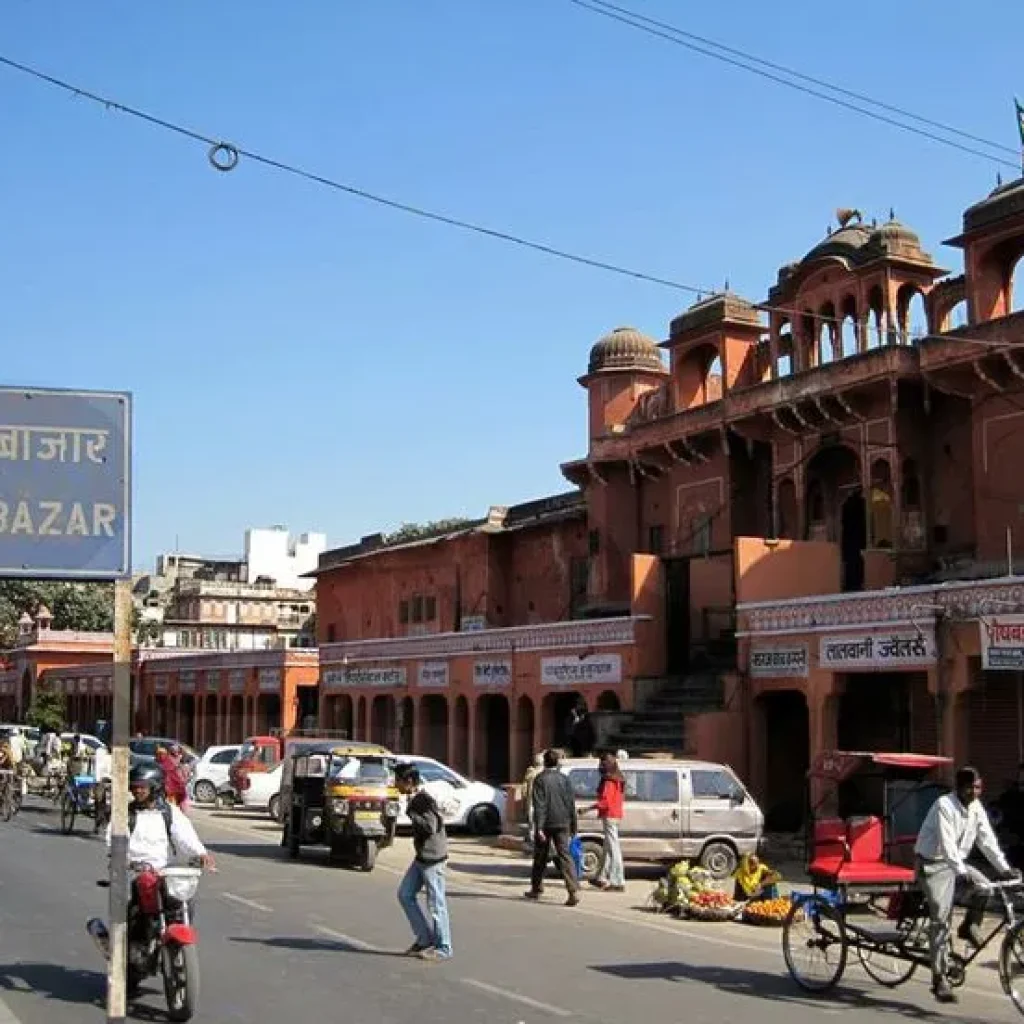
Johari Bazaar is a famous market in Jaipur known for jewellery, gemstones, and traditional ornaments. Located near Hawa Mahal, it has been a major shopping place for over 300 years.
The market is popular for Kundan, Meenakari, and Polki jewellery. Jaipur is also known for processing many precious stones like emeralds, rubies, and sapphires. You can also find textiles and traditional clothes here.
It’s a great place for shopping, but bargaining is important. Always check for proper certificates when buying expensive items.
| Best Time to Visit | Morning or evening |
| Shopping Tip | Bargain to get better prices |
Bapu Bazaar – Textiles and Handicrafts

Bapu Bazaar is a lively market known for textiles, handicrafts, and traditional Rajasthani items. It stretches from Sanganeri Gate to Choti Chaupar.
The market is famous for block-printed fabrics like Sanganeri and Bagru prints, along with bandhani and leheriya designs. You can also find mojaris (traditional footwear), blue pottery, bags, and souvenirs at affordable prices.
It’s a great place for budget shopping, with options for clothes, handicrafts, and local items. Street food stalls also add to the experience.
| Best Time to Visit | Evening |
| Shopping Tip | Compare prices and bargain for best deals |
Tripolia Bazaar – Traditional Rajasthani Items
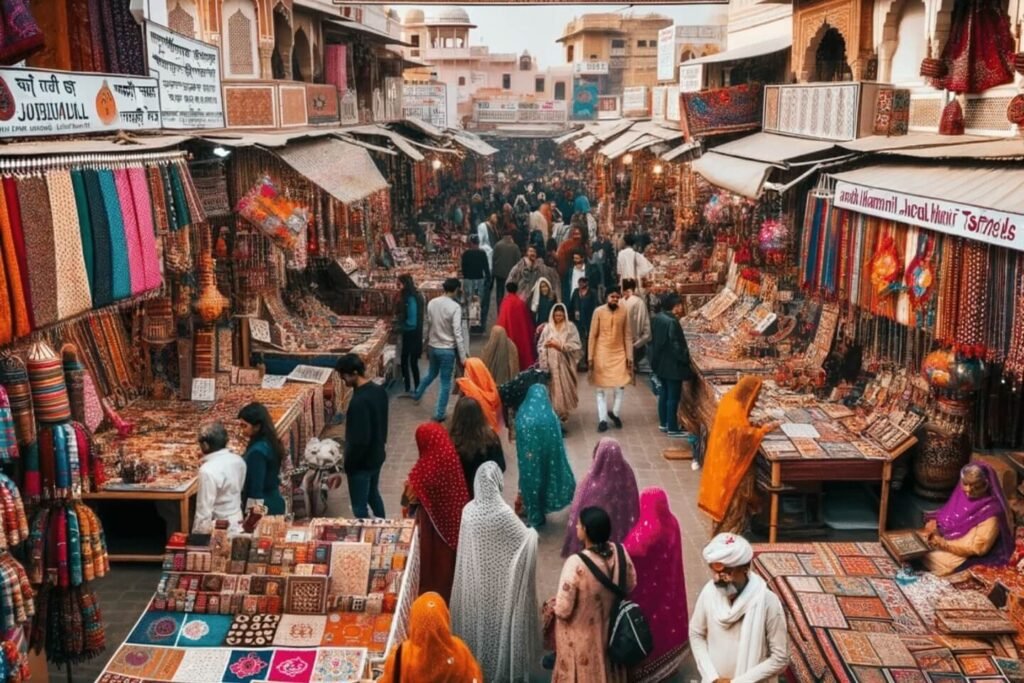
Tripolia Bazaar is a traditional market near the City Palace, known for authentic Rajasthani items and a local shopping experience.
The market is famous for lac bangles, brassware, iron items, and handwoven carpets. You can also find textiles like dhurries, quilts, and embroidered fabrics made using traditional methods.
Compared to other markets, Tripolia Bazaar feels more local and less crowded with tourists, making it great for a relaxed shopping experience.
| Best Time to Visit | Morning |
| Shopping Tip | Bargain politely and check product quality |
Nehru Bazaar – Footwear and Street Food
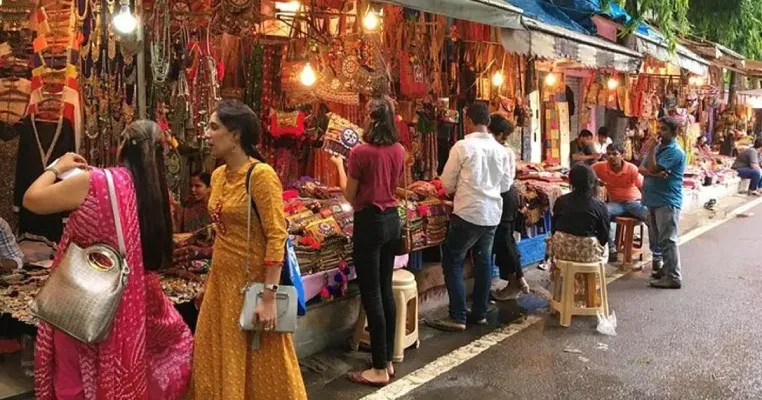
Nehru Bazaar is a lively market in the old city known for footwear, textiles, perfumes, and street food.
It is especially popular for mojaris (traditional shoes), bandhani and leheriya fabrics, and traditional attars (natural perfumes). You can also enjoy local snacks like pyaaz kachori and mirchi vada while shopping.
The market offers a mix of traditional and modern items, making it a great place to explore Jaipur’s local culture.
| Best Time to Visit | Evening |
| Shopping Tip | Check quality before buying and try local street food |
Tourism of Jaipur
Jaipur is capital of Rajasthan, and it is the most famous city in Rajasthan for travel. Every season Jaipur attracts millions of traveler to explore its culture and royal heritage sites.
Jaipur tourism is working hard to make travel easy for travelers, and they make sure visitors enjoy without any issues. This is the big reason why Jaipur tourism is popular day by day.
In winter, visitors come here from all over the world, including top-tier countries, which is good thing for our country and city. It is possible because of Jaipur tourism, they work hard to make a better travel experience for travelers.
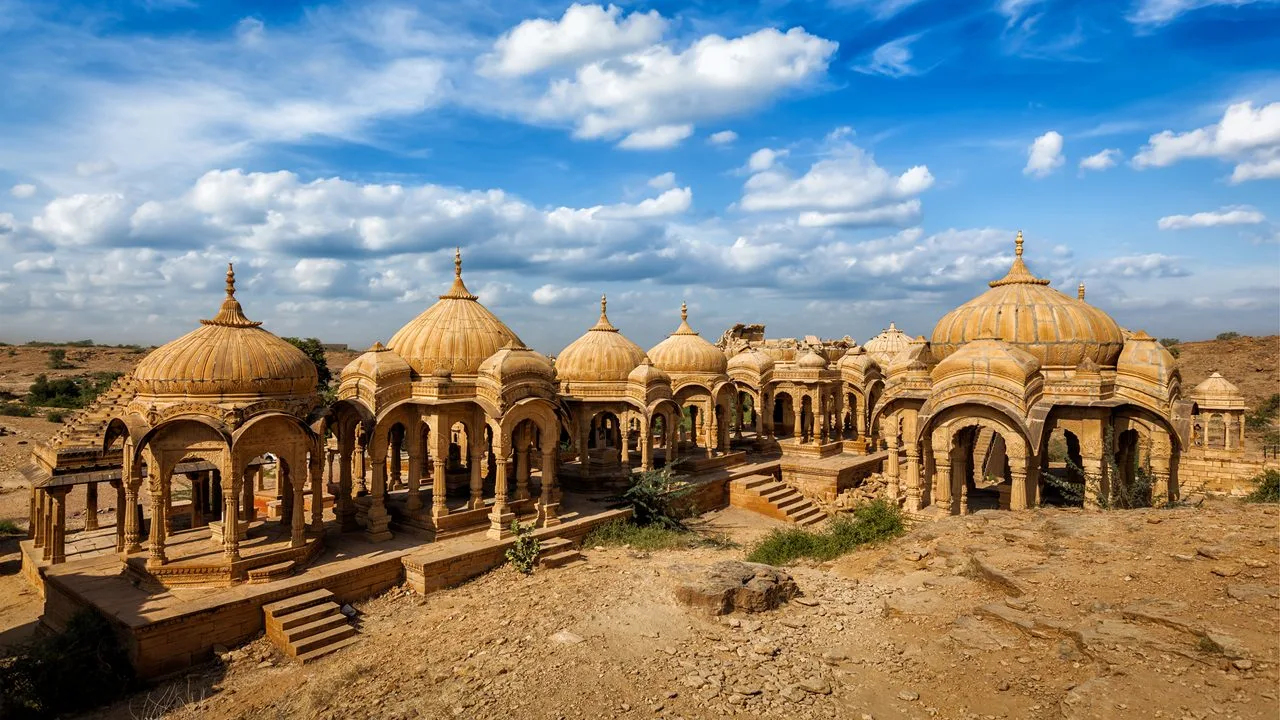
Some Beautiful Images of Jaipur
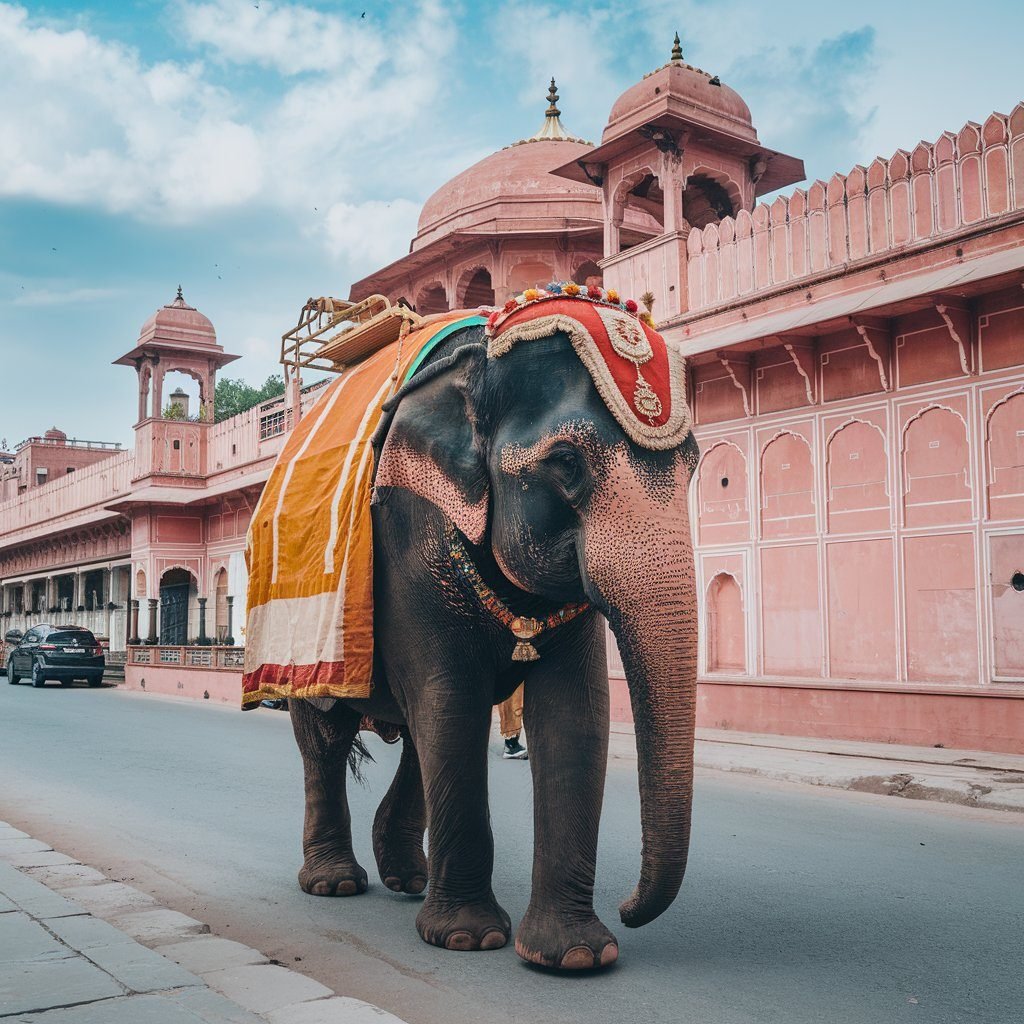
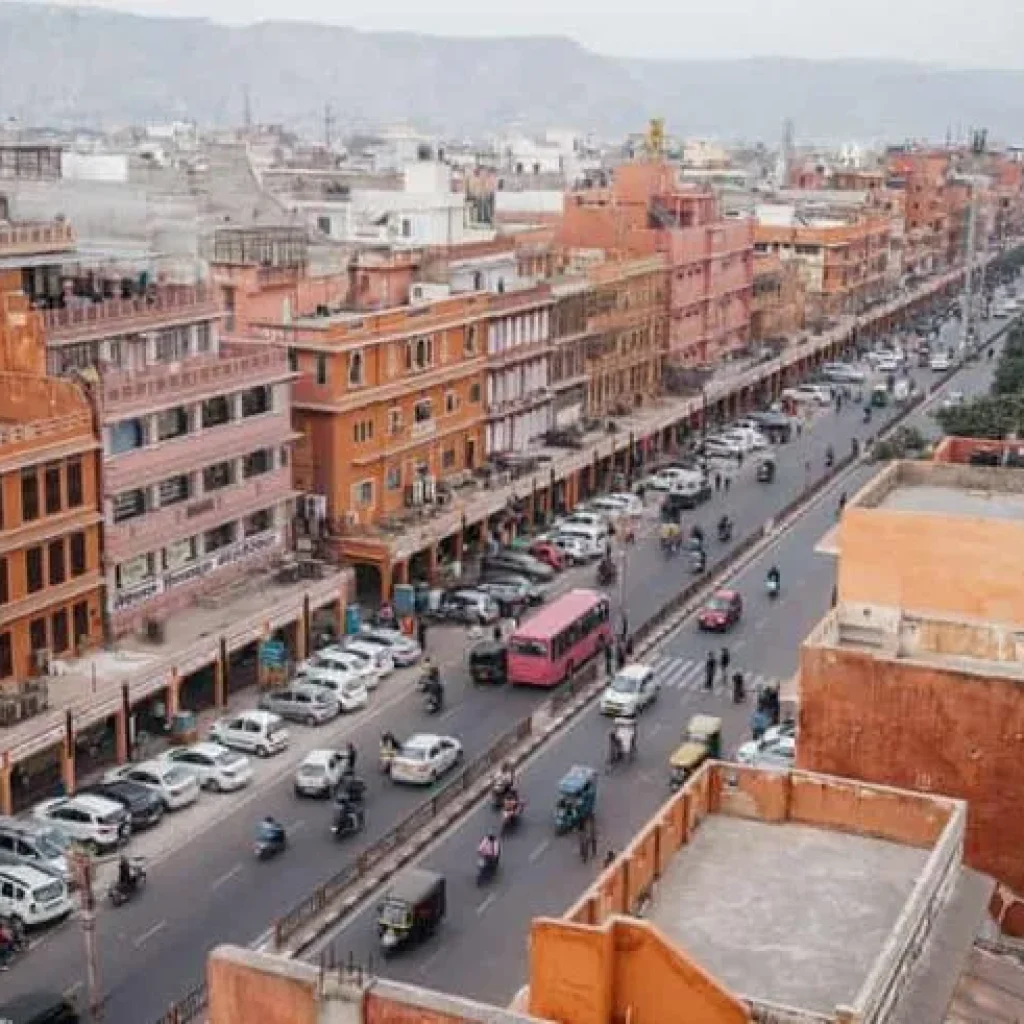
Here are some beautiful images of Jaipur.



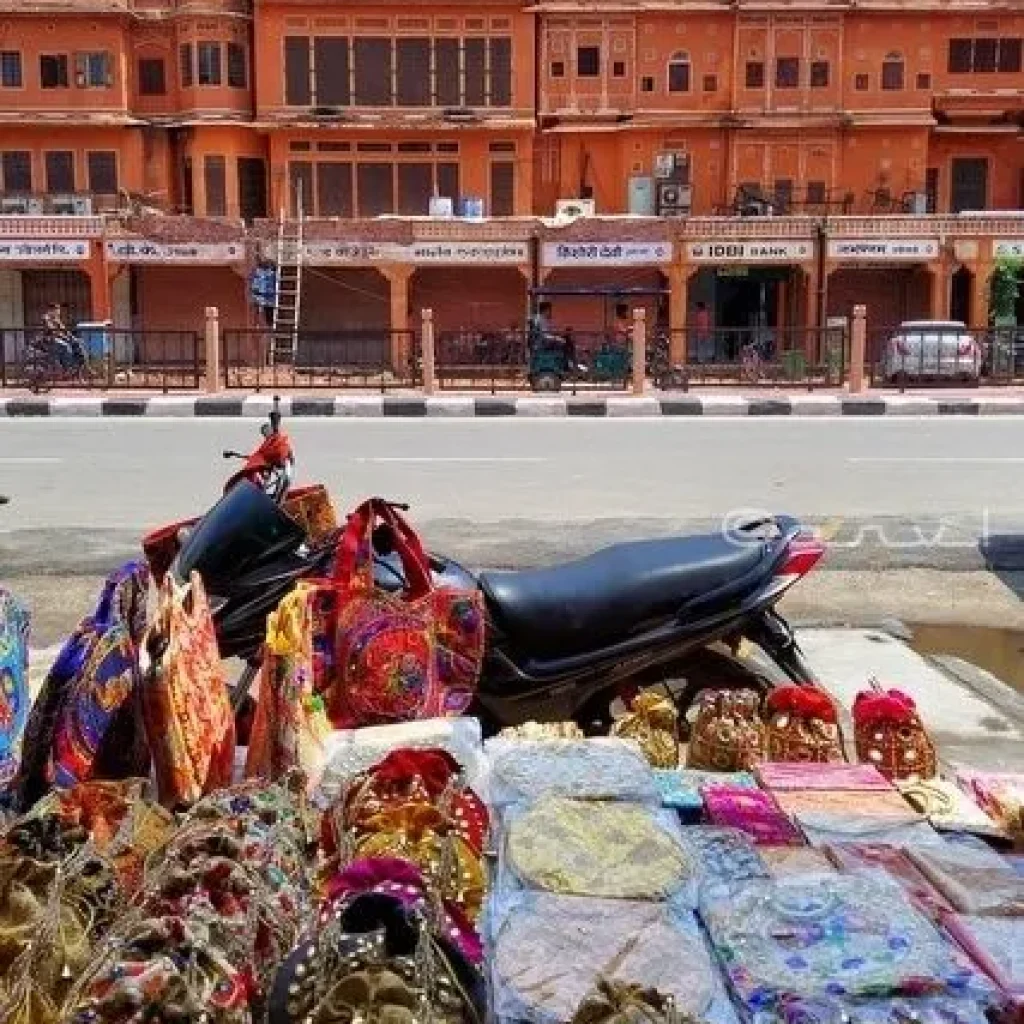

Basic Itinerary for Visiting Jaipur
Day 1: Historical Monuments and City Center
Start your Jaipur exploration with an early morning visit to Amber Fort, arriving before 9:00 AM to avoid crowds and heat. Spend 2-3 hours exploring the palace complex, Sheesh Mahal, and gardens. Return to the city center for lunch at a traditional Rajasthani restaurant.
Afternoon visits should include Jal Mahal for photography (30 minutes), followed by City Palace (2-3 hours). The palace complex requires thorough exploration to appreciate its museums, courtyards, and architecture. Conclude the day at Hawa Mahal, ideally timing your visit to photograph the facade during golden hour (5:00-6:00 PM).
Evening options include dinner at Chokhi Dhani, an ethnic village resort offering traditional Rajasthani cuisine and cultural performances, or exploring MI Road for shopping and dining in modern Jaipur.
Day 2: Forts, Observatory, and Markets
Begin day two at Nahargarh Fort, arriving early to beat crowds. Spend 1-2 hours exploring the fort and enjoying panoramic city views. Continue to nearby Jaigarh Fort (30 minutes by vehicle) to view Jaivana Cannon and learn about medieval warfare.
After lunch, visit Jantar Mantar (1-2 hours) to explore astronomical instruments. Hire a guide or join a tour to fully understand the observatory’s scientific significance. Late afternoon should be dedicated to shopping in Johari Bazaar and Bapu Bazaar, allowing 2-3 hours for browsing and purchases.
Evening can include watching sunset from Nahargarh Fort (if timing permits) or attending a cultural performance at Jawahar Kala Kendra, Jaipur’s premier arts center.
Day 3: Additional Attractions and Cultural Experiences
For travelers with extra time, day three can include:
- Albert Hall Museum (Central Museum), showcasing Rajasthani art, artifacts, and the famous Persian Garden Carpet
- Birla Temple (Laxmi Narayan Temple), a modern marble temple offering evening aarti ceremonies
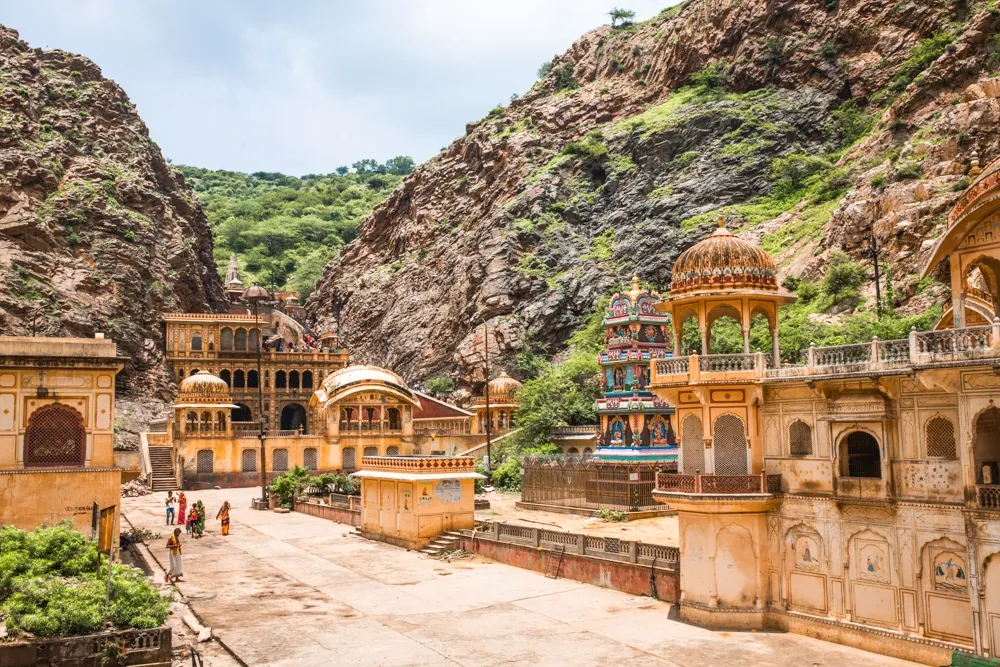
- Galtaji Temple (Monkey Temple), a pilgrimage site with natural springs and resident monkeys
- Sisodia Rani Garden, a terraced garden with fountains and painted pavilions
Cultural experiences include cooking classes for traditional Rajasthani cuisine, block printing workshops, or pottery demonstrations. These hands-on activities provide deeper cultural understanding beyond sightseeing.
For those interested in complete Rajasthan exploration, consider extending your journey to Udaipur, Jodhpur, and Jaisalmer. Many travelers combine Jaipur with Jaipur-Udaipur tours or the popular Jaipur-Jodhpur-Udaipur circuit.
What to Eat in Jaipur
Jaipur is not only famous for its royal history, old places, but it’s also popular for some cuisines which are most popular in Jaipur, such as Rabdi ghewar during teej festival, laal maas, Ker sangri and much more. During your city sightseeing, you should try famous snacks like kachori, samosa and fafda of Samrat, which is a famous shop located in the Chandpole market. The food is a balance of vegetarian traditions, Rajasthani food and Mughlai influences on non-vegetarian food.
Dal Baati Churma is one of the most famous dishes of Jaipur. Baati are hard wheat balls that are baked in a fire or oven. They are crushed and eaten with dal (lentils) and churma (a sweet dish made from wheat). This meal was earlier eaten by soldiers and travelers because it gives long-lasting energy with ghee, protein, and carbs.
Laal Maas is a popular non-vegetarian dish of Jaipur. It is made with mutton cooked in a spicy gravy of yogurt, garlic, and red Mathania chilies. It is known for being spicy, but a good laal maas has a balanced taste. Many restaurants make a less spicy version for tourists.
Ker Sangri is a traditional desert dish. It is made using dried berries (ker) and beans (sangri) that grow in dry areas. The dish tastes a little sour and spicy. People used dried ingredients so they could eat vegetables even in all seasons.
Ghewar is a famous sweet in Jaipur, especially during Teej and Raksha Bandhan. It looks like a round honeycomb and is made from flour and sugar syrup. It comes in different types like mawa, rabdi, and plain. It is crispy but also juicy because it soaks sugar syrup well.
Pyaaz Kachori and Mirchi Vada are very popular street foods. Pyaaz kachori is a deep-fried snack filled with spicy onion mixture and served with chutney and curd. Mirchi vada is made from big green chilies filled with spicy potato, covered in batter, and fried. Even though it has chili, it is not too spicy because of the filling.
A Rajasthani Thali is the best way to taste many dishes at once. It usually includes dal, kadhi, gatte ki sabzi, vegetables, bajra roti, rice, churma, papad, and buttermilk. Many restaurants offer unlimited servings so you can eat as much as you want.
Kulfi and Lassi are perfect for cooling down in Jaipur’s heat. Kulfi is thicker than ice cream and comes in flavors like malai, kesar, and pista. Lassi is a yogurt drink that can be sweet, plain, or flavored. A famous place called Lassiwala on MI Road has been serving lassi since 1944.
The most famous snacks shops in Jaipur
- LMB (Laxmi Misthan Bhandar) on Johari Bazaar serves authentic Rajasthani thalis and sweets
- Rawat Mishthan Bhandar offers famous pyaaz kachori and sweets
- Spice Court provides traditional cuisine in a heritage setting
- 1135 AD at Amber Fort offers fine dining with fort views
- Street food vendors at Nehru Bazaar and MI Road for authentic local experiences
Best Time to Visit Jaipur
Jaipur has very different temperatures throughout the year, so you need to choose the best time to visit. The city has mostly three main seasons: summer, monsoon, and winters. Each season gives you a different experience to visit. Most of the travelers preffer Winter (October to March) to visit Jaipur, because of during this time the weather is pleasant and best for sightseeing.
Winter (October to March) – Best Time to Visit
Winter is the most comfortable time to visit Jaipur. Day temperatures stay between 20°C to 25°C, and nights can be cool, around 8°C to 12°C. The weather is pleasant, so you can enjoy sightseeing without feeling too hot. This is also the busiest season, so hotels are expensive and tourist places are crowded.
October and November are good months with nice weather and fewer crowds. December and January are very busy. The Jaipur Literature Festival in January attracts visitors from around the world, making the city lively but also increasing hotel prices. February and March also have good weather, but it starts getting a little warm by the end of March.
Monsoon (July to September) – Budget-Friendly Time
During monsoon, Jaipur gets rain and the surroundings turn green and beautiful. The temperature stays between 25°C to 35°C, but humidity is high.
This is a good time for budget travelers because hotel prices are much lower (30–50% cheaper). Tourist places are less crowded, and the scenery looks fresh and great for photos.
However, heavy rain can sometimes affect travel plans, and some old places may become slippery.
Summer (April to June) – Very Hot Season
Summer in Jaipur is very hot. Temperatures can go up to 40°C to 45°C, and sometimes even 47°C. It can be uncomfortable for sightseeing, especially during the day.
Most tourists avoid this time, but you can find very cheap hotels (up to 60–70% lower prices). If you visit in summer, go out early in the morning (6–9 AM) or in the evening (5–8 PM).
During the day, it is better to visit indoor places like museums with air conditioning. Festivals like Gangaur are also celebrated during this time, giving a cultural experience.
Jaipur experiences extreme temperature variations throughout the year, making timing crucial for comfortable travel. The city’s semi-arid climate features three distinct seasons: summer, monsoon, and winter, each offering different experiences.
Most famous Festivals According to seasons
- Teej (July-August) celebrates monsoon with colorful processions
- Gangaur (March-April) honors Goddess Parvati with traditional celebrations
- Diwali (October-November) illuminates the city with millions of lamps
- Makar Sankranti (January) fills skies with kites
- Jaipur Literature Festival (January) brings literary and cultural events
How to Reach Jaipur
Jaipur is a well-developed city, which has good connectivity through air, rail, and road networks, and easy arrival from domestic and international locations.
By Air:- Jaipur International Airport(Sanganer Airport) is located 13 kilometres from the city center. From Jaipur Airport, you can take any time flight to big cities like Mumbai, Pune, Bangalore, Kolkata, and Chennai, along with some international connections.
Airlines including Air India, IndiGo, SpiceJet, and Vistara serve Jaipur. Transportation to city center costs ₹400-600 by taxi, ₹150-200 by auto-rickshaw, or ₹30 by public bus.
By Train:- Jaipur Junction (Main railway station), located in the city center and its connects to most indian ctities thrugh regular express and superfast trains. From Jaipur Junction, you can take trains like Vande Bharat, Rajdhani Express, the Pink City Express, and the superfast train Shatabdi Express, which provides a comfortable travel experience.
The Jaipur station best facilities, including rooms, restaurants, waiting rooms, and luggage storage. From station, you can book a pre-paid taxi and an auto-rickshaw, but make sure you will book from the verified government counter.
By Road: National Highway connects Jaipur to major metro cities, with NH-8(Delhi-Mumbai highway) passing through the city. From the Bus stand of Jaipur, you can take a bus and easily reach where you want to go.
Jaipur is a well-developed city, so you can choose which bus is comfortable for you. There are many bus categories, such as ordinary, deluxe, and Volvo AC buses, with prices varying according to comfort level. All buses start from the Sindi camp, which is the city centre of Jaipur.
Most of the travelers preferd private taxis and car rentals, which offer flexibility for travelers wishing to explore at their own pace.
| Local Transportation fair | Within Jaipur, options include |
|---|---|
| Auto-rickshaws | Three-wheeled vehicles suitable for short distances (₹50-200) |
| Cycle-rickshaws | Eco-friendly option for walled city exploration (₹30-100) |
| App-based Cabs | Ola and Uber operate throughout the city with transparent pricing |
| Local Buses | Economical but crowded; limited route information in English |
| Metro | Jaipur Metro operates two lines connecting major areas, offering air-conditioned travel (₹5-30) |
| Rental Cars | Self-drive and chauffeur-driven options available through agencies |
Many travelers opt. for customized Jaipur tour packages that include transportation, accommodation, and guided tours.
Disclaimer: Prices, timings, and policies mentioned in this guide are subject to change. Always confirm current information from official sources or your tour operator before making final plans.
