
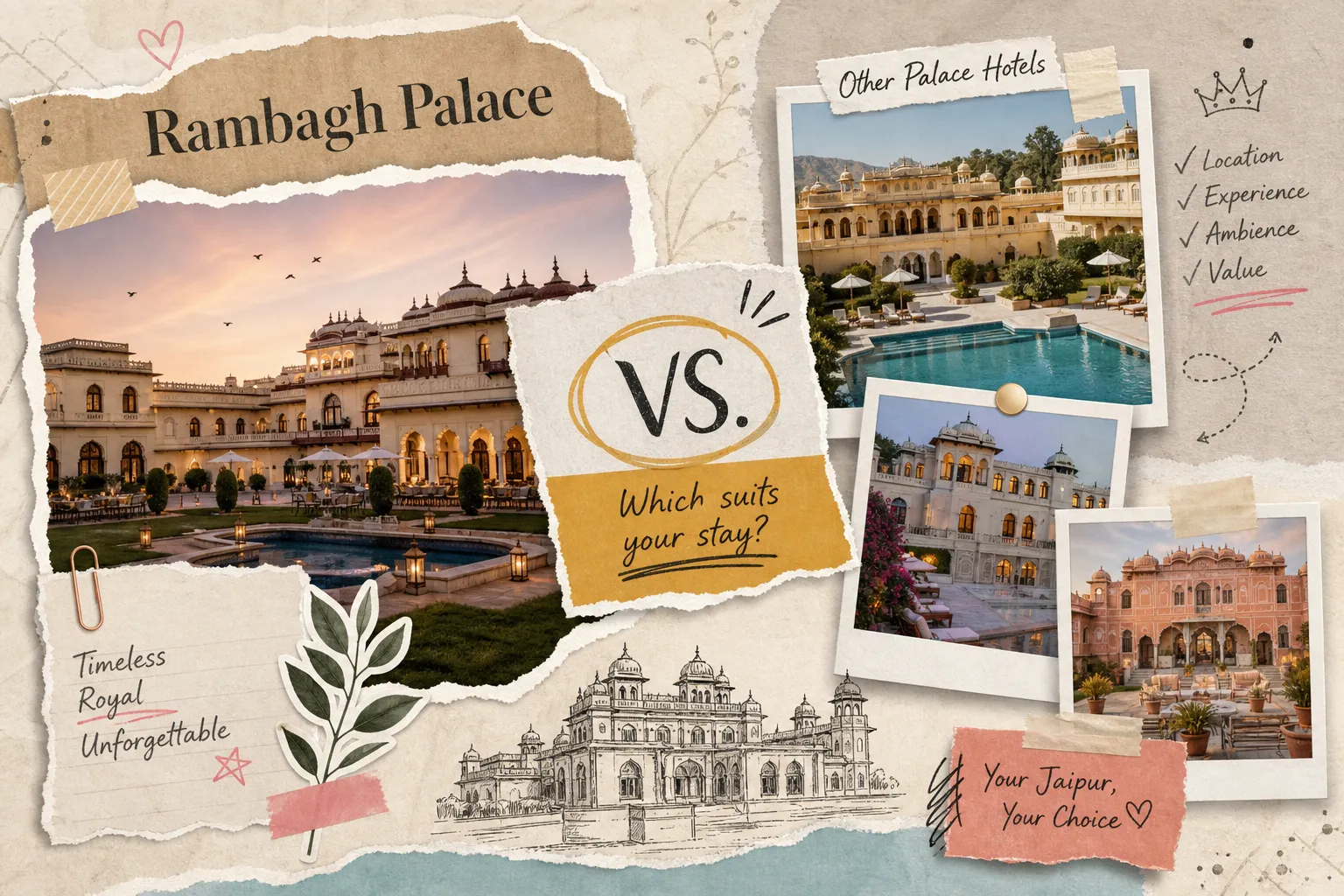
Jaipur Rambagh, Rambagh Palace, sits in a category of its own among the Pink City’s palace hotels. From restored havelis in the old city to grand properties lining the southern boulevards, Jaipur does heritage hospitality well. But the Jaipur Rambagh experience is not just a matter of marketing language. This was an actual royal home, built in 1835, expanded across 47 acres, and lived in by the royal household from the 1920s through to the mid-twentieth century before Taj Hotels converted it into a luxury hotel in 1957, making it one of India’s most celebrated heritage properties.
This guide gives you the concrete detail you need to decide whether Rambagh suits your trip: the history, the room tiers, honest 2026 pricing, what the on-site experiences actually feel like, and how to build a 2, 3 day Jaipur itinerary around it. If you have already decided and want help with the logistics, the team at Kingsland Holiday specialises in arranging Rambagh stays and bespoke Jaipur itineraries for international travellers from the UK, US, Australia and Europe. First, though, we want to give you the information to make the right call.
The royal legacy that separates Rambagh from every other palace hotel in Jaipur
From hunting lodge to royal home: Rambagh’s history
Taj Rambagh Palace was not built to look like a palace. It was a palace that became a hotel, and that distinction matters enormously when you compare it to competitors. The property began in 1835 as a modest royal garden house. It was expanded into a hunting lodge and then, in the 1920s, converted into the official residence of Maharaja Sawai Man Singh II, one of Jaipur’s most celebrated rulers and a noted patron and player of polo. The estate’s polo culture is not a decorative theme conjured up by a marketing team. It is embedded in the property’s identity: the lawns, the Polo Bar, the old portraits, all of it traces back to a man who actually lived here.
When Taj Hotels took over the property, the brief was preservation first, hospitality second. That sequencing shows. Other Jaipur palace hotels offer beautiful facades and heritage-style interiors, but Rambagh carries the weight of genuine lived history in a way that is difficult to replicate.
Architecture and the 47-acre estate
The architectural language is a confident blend of Mughal and Rajput influences: carved sandstone pavilions, ornate jharokhas (the projecting balcony windows typical of Rajput design), and manicured Mughal-style gardens that unfold across the full sweep of the estate. The grounds alone are worth an unhurried morning walk before the day’s sightseeing begins. Smaller boutique palace hotels in Jaipur can be charming and intimate, but they simply do not have the scale or depth of setting that Rambagh offers. With 47 acres, the property breathes in a way that compact city havelis cannot.
Jaipur Rambagh: rooms, suites and 2026 prices
Entry rooms versus heritage suites: the honest difference
Taj Rambagh Palace has 45 rooms and 33 suites across five main categories: Palace Rooms, Historical Suites, Royal Suites, Grand Royal Suites and Grand Presidential Suites. The entry-level Palace Room offers a four-poster bed, a spacious bathroom, and garden or courtyard views. It is a comfortable, well-appointed stay and the heritage styling is present throughout. What it does not offer is the separate living area, the more elaborate period furnishings, or the heightened butler-focused service that comes with the suites.
On OTA channels, Palace Rooms currently range from roughly ₹30,000 to ₹95,000 per night, depending on the season and rate plan. Historical Suites and Royal Suites occupy the ₹1.1 lakh to ₹2.5 lakh range, and this is where the palace character becomes immersive. Certain top-tier packages and the most exclusive suite configurations, including those associated with the Maharaja’s former private quarters, have been listed above ₹5 lakh on OTA platforms, reaching as high as ₹12 lakh for specific festive packages, placing them in an entirely different conversation.
What drives pricing up or down
Season is the biggest lever. October to March is peak, and rates across all categories climb sharply during this window, particularly in November and February, when Rajasthan’s wedding season is in full swing. The booking channel matters too: Taj direct (tajhotels.com) typically matches OTA rates but adds Taj InnerCircle loyalty points and more flexible cancellation terms, making it the smarter first port of call. Rate plan is the third variable. Non-refundable rates can be 15, 25% cheaper than flexible options, but they carry full-cost penalties, so they are a sensible choice only when your dates are completely fixed. For festive or wedding-adjacent dates, book early, availability at Rambagh tightens fast once the season turns.
Jaipur Rambagh, signature on-site experiences
Heritage dining and the Polo Bar
Rambagh Palace currently operates four dining venues and one bar. Suvarna Mahal is the headline: a formal Indian fine-dining restaurant set inside the former royal banquet hall, open for dinner. The space itself is the experience: high ceilings, ornate detailing, and a menu built around royal Rajasthani cuisine. Rajput Room handles all-day dining from early morning through to late night, making it the practical anchor for breakfast and casual meals. The Verandah is the tea lounge and poolside space, a reliable choice for a lighter afternoon meal. Steam, set in a restored vintage carriage-themed setting, offers dinner with a distinctive atmosphere.
And then there is the Polo Bar: a beautifully appointed bar with finger food, portraits of the polo-playing Maharaja on the walls, and the kind of unhurried atmosphere that makes a good evening nightcap worth lingering over. Private dining in the palace gardens is also available on request, something your concierge or butler can arrange at check-in. For couples on a honeymoon or anniversary trip, this is the kind of experience that justifies the room rate on its own.
Note: restaurant opening hours are subject to change; confirm current timings directly with the hotel at booking.
J Wellness Circle spa and royal ritual treatments
The on-site spa, J Wellness Circle, is a full-service facility open daily. The treatment menu goes well beyond a generic hotel spa formula: Ayurvedic therapies, body wraps, aromatherapy sequences and bespoke wellness experiences that draw on Indian wellness traditions rather than a standardised international menu. The royal ritual treatments, in particular, are designed around the palace’s heritage identity. If you are visiting for three nights or more, building in at least one spa session is a sound idea, especially on the final morning before departure.
Gardens, the polo lawn and evening atmosphere
Guest reviews consistently highlight the grounds as one of Rambagh’s most unexpected pleasures. The Mughal gardens, illuminated in the evening, create a calm that is hard to find in a city as energetic as Jaipur. Walking the polo lawn at dusk, with the palace lit behind you, is one of those travel moments that photographs never quite capture. Smaller boutique properties in the city offer their own brand of charm, but they cannot manufacture this kind of spatial calm.
A 2, 3 day Jaipur itinerary with Rambagh as your base
Day 1: arrival, check-in and settling into the palace
Rambagh Palace is 9, 11 km from Jaipur Airport, roughly 20, 30 minutes by private car in normal traffic, and 4, 5 km from Jaipur Railway Station. Aim to arrive in the early afternoon: check-in opens at 14:00, and arriving with time to spare means you can settle in before the evening begins rather than rushing straight to dinner. Spend the late afternoon walking the palace gardens, then head to Suvarna Mahal for dinner. Close the evening with a drink at the Polo Bar. Kingsland Holiday’s airport pickup service, with an English-speaking driver and air-conditioned vehicle, takes the guesswork out of arrival day completely, whether you are landing at Jaipur Airport or pulling in on the overnight train from Delhi.
Day 2: private city tour of forts, palaces and bazaars
Amber Fort is approximately 13 km from Rambagh, about 12, 15 minutes by car, and the best time to visit is early morning before the tour groups arrive. From Amber, a full-day private city circuit covers City Palace, Jantar Mantar, Hawa Mahal and Johari Bazaar, all clustered within 2, 3 km of each other in the old city. The difference between a self-organised day and a day with Kingsland Holiday’s dedicated driver is significant in Jaipur: the old city’s lanes are confusing, parking near Hawa Mahal is chaotic, and knowing the right local lunch spot takes local knowledge that no app can reliably replicate. A private driver who knows the city removes all of that friction.
Day 3: morning leisure and a curated departure
Use the final morning well. A spa appointment at J Wellness Circle before the noon checkout is a pleasant way to close a palace stay. The hotel periodically offers polo and horse-riding sessions, confirm availability at check-in, as scheduling depends on the season and current programming. For onward travel, Kingsland Holiday can build a Jaipur-to-Agra leg into the same itinerary (drive time varies between approximately three and four hours depending on route and traffic, with the Taj Mahal as the payoff) or an extended Rajasthan circuit through Jodhpur, Jaisalmer and Udaipur, all using the same private vehicle setup. Rambagh makes a natural starting point for a broader India itinerary precisely because Jaipur sits at the western anchor of the Golden Triangle.
Booking smart: timing, policies and what to pack
When to visit and how the season affects your stay
October to March is the recommended window for a Jaipur palace stay: temperatures hold between 10°C and 25°C, skies are clear, and outdoor palace dining is comfortable. April to June is hot (above 40°C) and largely avoidable for this kind of trip. The July to September monsoon brings lower rates and lush gardens, but humidity and heavy rain make it a compromise. November to February is the sweet spot for atmosphere, but it is also peak wedding season in Rajasthan, so rates at Rambagh rise and availability contracts. For the best balance of good weather and reasonable value, aim for mid-October to mid-November or late February into March.
Booking channels and cancellation terms worth knowing
Check Taj direct first: the rates usually match OTA pricing, but you gain Taj InnerCircle loyalty points and more generous cancellation windows. As noted above, non-refundable rates can save significantly, but only when your dates are completely firm. For festive or wedding-adjacent dates, the hotel applies group-style terms that differ from standard individual booking conditions. Read the advance payment requirements carefully before confirming, particularly for bookings made more than 60 days out. If you are planning a Rambagh Palace wedding venue booking or a large-scale celebration, request the hotel’s events team separately, as different terms and minimum-spend requirements apply.
What to pack for a palace stay
Suvarna Mahal and Rajput Room both observe dress standards for dinner, smart-casual is the floor, not the ceiling, so dressing up is always appropriate. Comfortable walking shoes are essential for Amber Fort, which involves a meaningful amount of uphill walking on uneven stone. A light layer is useful for early-morning tours when the air is cool even in October. Between November and February, evenings in Jaipur drop to 8, 12°C, so a jacket is not optional. High-SPF sunscreen is worth packing regardless of the season, particularly for outdoor sightseeing during the middle of the day.
Is Rambagh Palace worth it over other Jaipur palace hotels?
Who Rambagh suits best
Rambagh Palace is the right choice for travellers who want the deepest possible immersion in Jaipur’s royal heritage and are comfortable with room rates from ₹30,000 at the entry level to ₹2.5 lakh and beyond for the suite categories. It is particularly well-suited to honeymoon couples, milestone celebrations, and first-time India visitors who want one truly iconic stay to anchor their entire trip. The Taj service standard adds consistency that independent heritage properties cannot always match. Travellers on tighter budgets, or those who prefer boutique intimacy over grand-scale luxury, may find that alternatives such as Samode Haveli or Jai Mahal Palace align better with their priorities, both are reasonable options to consider. But for heritage depth, spatial grandeur and service reliability in a single property, Rambagh Palace is the standout choice in Jaipur.
Plan your Rambagh stay with Kingsland Holiday
Kingsland Holiday, based in Jaipur, books Rambagh Palace as part of fully personalised India itineraries for international travellers from the UK, US, Australia and Europe. From airport pickup on day one, to private Amber Fort and city tours on day two, to a seamless Golden Triangle or Rajasthan extension from day three onwards, the team handles the logistics so you can focus entirely on the experience. Private, English-speaking drivers and air-conditioned vehicles are used throughout, no group departures, no fixed schedules imposed on your pace. If Jaipur Rambagh, Rambagh Palace, is on your list, get in touch with Kingsland Holiday to start planning your itinerary today.
